Roof lanterns flood your home with natural light and create a stunning architectural feature. But that beauty only works if the space beneath stays comfortable and usable. That is why more homeowners now choose a single horizontal roof lantern blind system that spans the boxed upstand, rather than fitting individual blinds into each shaped pane of glass. This modern approach gives you better performance, cleaner lines and a far more reliable long term solution.
Whether you are planning your build, halfway through it or trying to fix a problem after completion, you face the same question. What matters most to you in this space? A good investment is one that manages your priorities and protects the dream you had when you first imagined the room. You want natural light, but you also want control. You want beauty, but you also want comfort. Getting the balance right starts with understanding what your priorities actually are.
Below are the key considerations that help you decide what matters most for your roof lantern blind system.
Below are the key considerations that help you decide what matters most for your roof lantern blind system.
Priority 1: Managing Summer Heat Gain
Summer heat gain is one of the biggest reasons homeowners invest in roof lantern blinds.
Andrew invested in a roof blind because “It just gets too hot for us. It’s like a greenhouse in the summer”.
Even a north facing extension can overheat when the sun is high and the days are long. We all want natural light to brighten the dull days, but during a heatwave that same light can turn a beautiful room into an unbearable one.
Glazing Versus Heat Gain
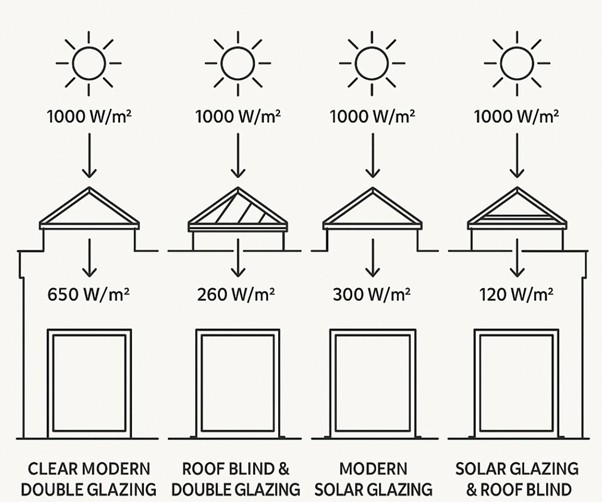
With foresight during design or hindsight after moving in, a roof vent helps hot air escape. But ventilation alone cannot solve the problem. The real challenge is the sheer amount of solar energy entering through the glass. On a peak summer day, solar irradiance can reach 1000 W/m². Modern double glazing with a g value of 0.65 still allows around 650 W/m² of heat to pass through.
A 2m x 4m roof lantern can therefore transmit more than 5 kW of heat into the room. That is the same as running five 1 kW storage heaters at full power.
The heat does not disappear when the sun goes down. Worktops, floors and furniture absorb that energy throughout the day and then re‑radiate it back into the room long after the sun has gone to bed. This is why some extensions stay warm well into the evening.
To prevent this, you need to manage the shortwave solar energy before it becomes longwave infrared heat inside your home. High performance fabrics reflect heat back through the glazing before it converts into the overhead radiator effect you feel in summer. A protective headbox keeps the fabric clean so it stays reflective for longer.
Sun sensors can take this a step further. They give your blind the intelligence to close automatically when the sun becomes intense, even if you are not at home. This keeps the room stable, protects your comfort and stops heat building up in the first place.
Managing heat gain is not about blocking light. It is about controlling the energy that comes with it so your living space stays bright, comfortable and usable.
Priority 2: Reducing Cold Drafts, Improving Winter Insulation and Saving Energy
Winter comfort is a priority that often surprises homeowners. Many people focus on summer overheating and only discover the winter benefits of a roof lantern blind after living with their new space for a while. On frosty mornings, our body heat naturally transfers toward the coldest surface in the room. With a roof lantern, that cold surface is the large expanse of glazing above you. The result is a noticeable downward draft that makes the room feel colder than it actually is.
Most people instinctively turn the thermostat up a couple of degrees to compensate. The same Andrew, who originally invested in an Athena roof lantern blind to stay cooler in the summer, noticed this exact effect. Once his blind was installed, he immediately felt the difference. In his words, “On frosty mornings it stops the heat from being lost from the room so it works both ways.”
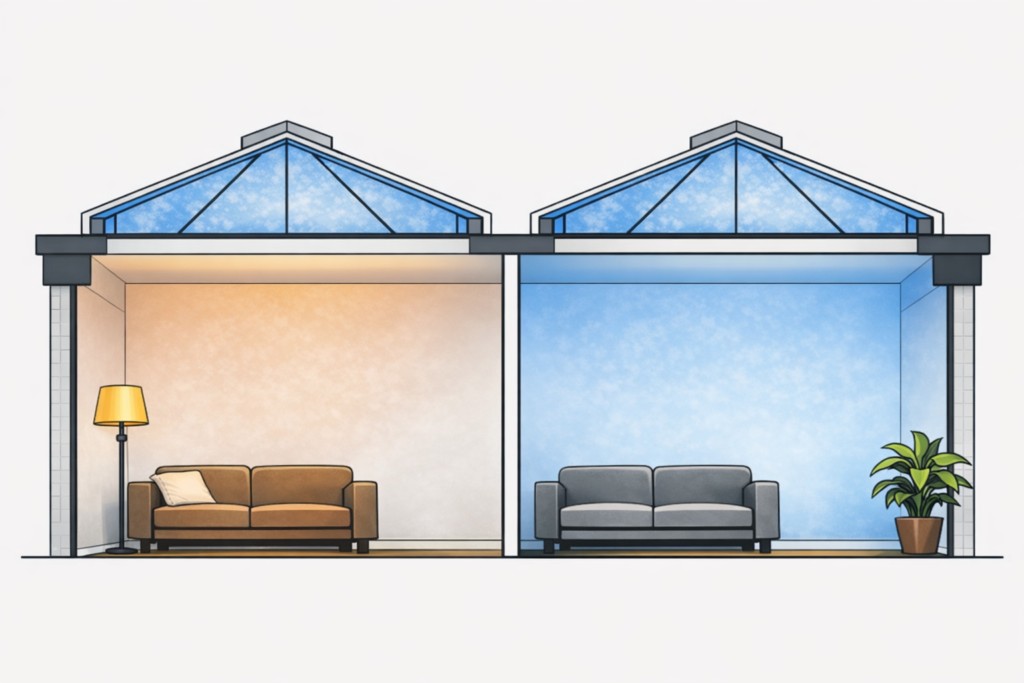
This is exactly how a well‑designed roof lantern blind should perform. By creating a barrier between the warm room and the cold glass, the blind slows the transfer of heat to almost negligible levels. The right fabric choice makes a significant difference. High performance fabrics, especially aluminium backed options, trap the cold air above the fabric line inside the lantern. This prevents that cold air from dropping into the room through conduction and keeps the thermostat stable.
The result is a more comfortable living space, fewer temperature swings and less reliance on the heating system. A roof lantern blind becomes an energy saving tool as much as a shading solution, working quietly in the background to keep your home warm without wasting energy.
Priority 3: Managing Overwhelming Brightness
Roof lanterns are brilliant on dull days. They pull daylight deep into ground floor extensions so the original rooms stay bright even though the windows and doors are now further away. That natural light is what makes the space feel open and inviting. On sunny days the story changes.
Glare can hit one side of the dining table while the kitchen controls become impossible to read. When customers start wearing sunglasses indoors it is clear the brightness needs managing. Having the ability to control the light when needed keeps the space comfortable and keeps the dream alive throughout the year.
Some homeowners worry that shading the lantern will make the room dark. It will not. On bright days there is already plenty of light coming from the surrounding glazing. The lantern does not need to blast the room with extra brightness. Many homeowners prefer the lantern to have its own sunglasses rather than wear theirs inside.
The level of light control depends on fabric choice and openness factor. High performance fabrics reduce glare while still allowing a soft glow of daylight through. The right balance keeps the room bright and comfortable without the harshness that makes the space difficult to use.
Priority 4: Reducing Glare on the TV and Screens
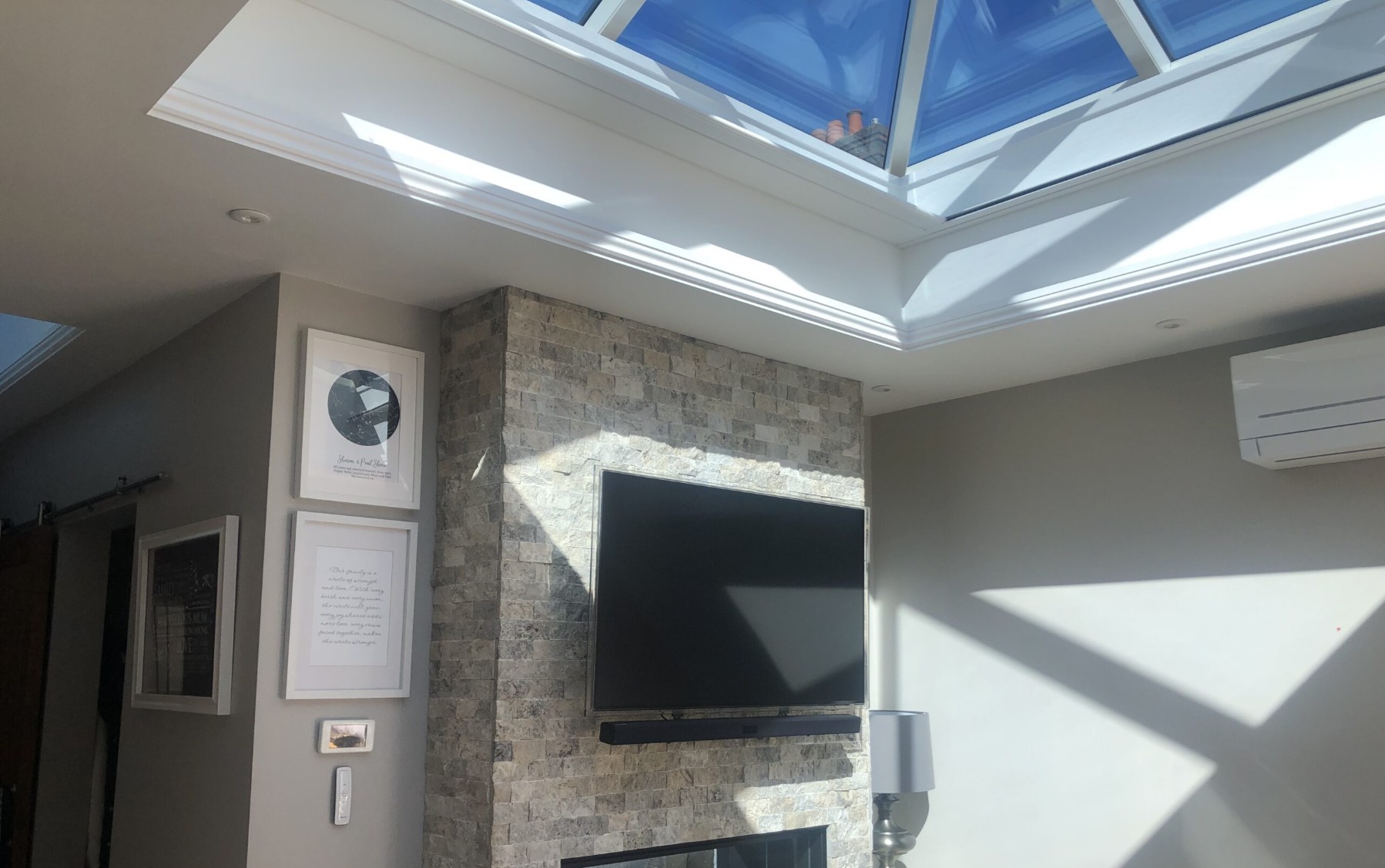
Many new extensions include a large flat screen on the wall, so it is worth thinking early about how the space will be used. A roof lantern positioned near a TV can create strong reflections that make watching anything difficult. Battling with TV glare is not how you imagined spending your weekend downtime.
Some white fabrics create a floodlit haze when sunlight passes through them. This haze can sit across the TV screen like a glowing layer and make the viewing experience just as bad. Choosing the right fabric is essential if screen glare is a priority. Certain fabrics, including some white options, are engineered to eliminate this haze and prevent reflections on TVs and laptops.
To manage screen glare effectively, we usually need to reduce visible light transmission to around 5% as a guide. If you plan to watch TV in this space or work on a laptop at the dining table or sofa, this level of control becomes important. It ensures you can use the room as intended without battling reflections or washed out screens.
The right fabric choice keeps the room bright enough to enjoy while protecting your viewing experience. It is a small detail that has a big impact on how the space feels day to day.
Priority 5: Protecting Flooring and Furnishings from Fading and Damage
When you invest in an extension, you also invest in everything that finishes the space. Flooring, sofas, artwork and soft furnishings all play a part in creating the look you want. Every time the sun comes out, that investment is at risk. Strong sunlight can age a room far faster than most people expect.
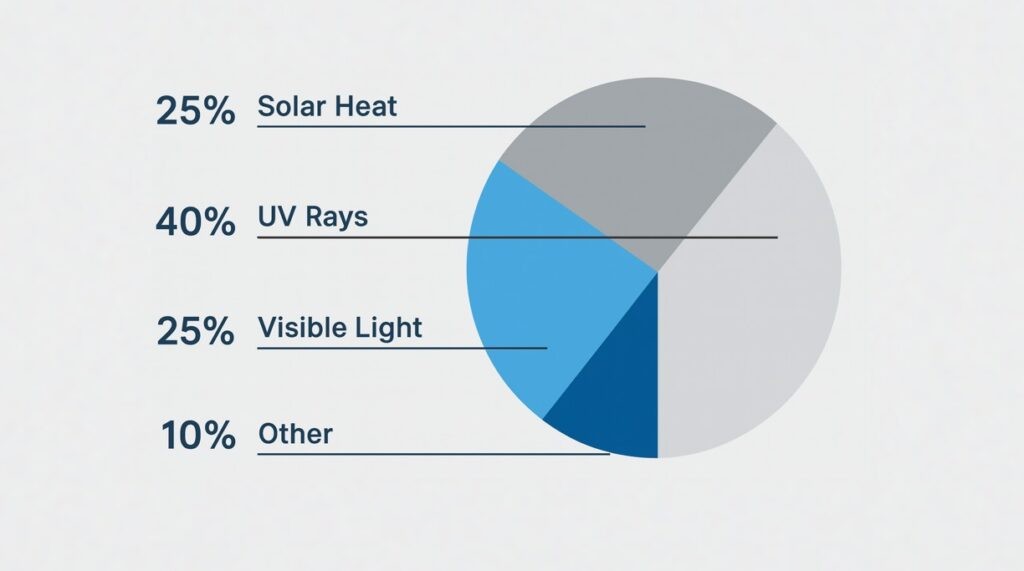
Intense direct heat can cause wooden and laminate flooring to discolour or even deform. Fabrics fade rapidly as dyes break down under the combined effects of heat, visible light and UV. UV alone is responsible for around 40% of the damage. When you combine visible light and direct solar heat this contributes to 50% of the issue. With the right roof lantern blind, you can remove up to 90% of the impact.
Electric blinds can be automated with sun sensors so the system closes itself when needed. This gives you peace of mind even when you are not at home. It was the final motivation for Darren and Helena in Wiltshire.
Helena said, “I came home to find the laminate flooring beginning to bubble in exposed areas of the room.” For them, protecting the space they had worked so hard to create made the decision simple.
Choosing the right roof lantern blind can pay for itself when you consider the cost of replacing damaged flooring and faded furnishings. It is a practical step that protects the look and feel of your home for years to come.
Priority 6: Achieving True Room Darkening
Some rooms need complete control over light. Blackout fabrics allow 0% visible light to pass through. When this is combined with zip technology in the side channels and blackout sealant strips on the hem bar, you can achieve the ultimate level of darkness. This is essential in certain spaces and at certain times of the year.
Bedrooms are the obvious example. On bright summer mornings we want to protect our circadian rhythms and avoid being woken too early. The health benefits of proper sleep are well documented. Cinema rooms are another area where deep room darkening transforms the experience. A roof lantern blind can turn a bright extension into a dramatic viewing space whenever you want it.
There are also practical reasons linked to planning. Extensions in national park areas often need to protect the night skies to gain approval or to avoid disturbing neighbours. A blackout roof blind with timers can close automatically at dusk and open again at dawn. This gives you bright, natural light during the day and protects the night skies in the evenings.
Room darkening is not just about comfort. It is about creating the right environment for sleep, entertainment and compliance. When it matters, the right blind makes all the difference.
Priority 7: Reducing Echoes and Reverberance When Entertaining
Open plan extensions look incredible but they often come with an unexpected side effect. Hard surfaces such as walls, tiled floors, worktops and large areas of glazing all reflect sound. When the room fills with people, the noise begins to bounce around and conversations start to overlap. It becomes difficult to hear the person sitting just across the table. The space loses the calm atmosphere you originally designed.
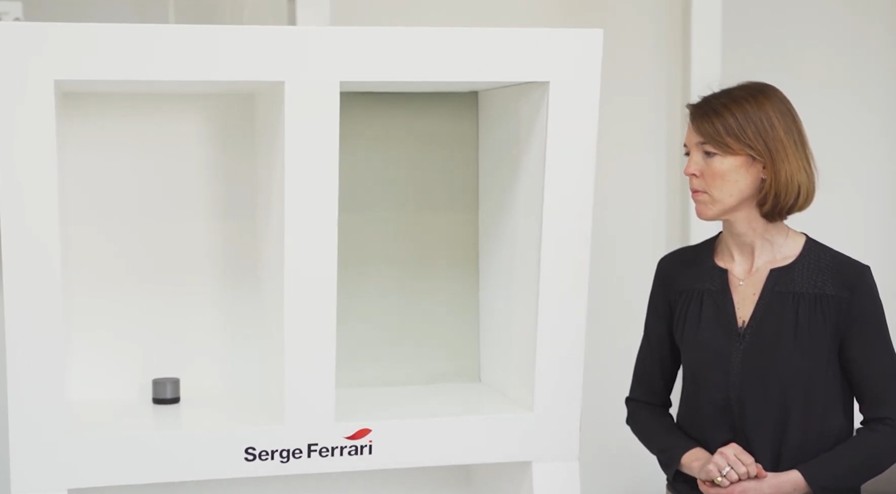
Roof lantern blinds can help bring that calm back. Fabrics from Serge Ferrari are engineered to absorb sound and can reduce echoes by up to 45%. This makes the room feel more comfortable and more enjoyable when entertaining. The difference is immediate once people start talking.
As well as managing light and heat, these fabrics allow you to manage sound. Combining these benefits creates the balanced, peaceful environment you imagined when planning the extension. One solution can improve several aspects of how the space feels day to day.
You can watch a demonstration of fabric echo reduction by Serge Ferrari using this YouTube Soltis Demonstration Video DE Séverine Basque
Priority 8: Stopping Flies Gathering in the Lantern
Every homeowner with a roof lantern knows the feeling. The moment you open the side glazing and start enjoying indoor outdoor living, flies seem determined to head straight up into the lantern. Once they get up there, they circle and buzz long after the sun has dropped. It puts a real dampener on the evening because it is almost impossible to guide them back out through the doors they came in through.
Andie’s extension backed onto woodland and she said, “The buzzing creatures collected in the top of the lantern which was pretty off putting especially when preparing food and eating the evening” It is a common problem and one that can be managed far more easily than most people realise.
The key is simple. Close the roof blind before opening the side doors. The
reduced light levels, the openness of the fabric and the zipped side channels all work together to stop flies and insects travelling up into the lantern where you cannot reach them. It turns the lantern from a trap into a barrier.
If this is your only priority, specific insect screen fabrics can be used. In most cases, though, fly control is an additional benefit that sits alongside other
priorities such as heat reduction, glare control or creating a more contemporary look. One blind can solve several issues at once and make the space far more enjoyable to live in.
Priority 9: Reducing the Feeling of Being Overlooked by Neighbours
More light and more space are the main reasons we build extensions, but in semi detached and terraced homes there is a real risk of feeling exposed through the roof lantern. Even if the neighbours are not looking in, the sense that they could be can make the space feel less private. This can matter during the day, but it becomes even more noticeable at night.
When the lights are on and the sky is dark, the roof lantern can create a goldfish bowl effect. You are relaxing with the family, the children are playing, and suddenly it feels like the room is on display. Most homeowners want to enjoy the space without worrying about unwanted views or the feeling of being watched.
A roof lantern blind fabric can solve this. All fabrics give you privacy during the day should need it but in the evening many leave you exposed. Choosing the right fabric ensures you feel secure and protected. You can enjoy the room without the sense of being overlooked.
For many families this becomes a key priority. It is not about blocking the outside world. It is about feeling at ease in your own home.
Keeping the Dream Alive
Every extension begins with a vision. More space, more light and a better way of living. It is easy to focus on the preferences such as no visible cords and no sag on the fabric. This matters a great deal but the roof blind needs to meet your priorities otherwise your investment will feel underwhelming. The performance of the blind is what protects the space you have created.
Not all fabrics work the same way. Light, heat, glare, privacy, sound, insects, fading and room darkening all behave differently depending on the fabric. Understanding how these elements interact is what turns a blind from a simple accessory into a vital part of the room’s performance.
By following the process and identifying your priorities first, we can match the right fabric and the right system to the way you want to live. This is how we protect your investment. It is how we keep your extension comfortable, usable and enjoyable throughout the year. Most importantly, it is how we keep your dream alive for you and your family.
The Next Steps To An Informed Investment
The next step is to look closely at your preferences. These are the choices that shape how the blind looks and how it behaves. How well it stands the test of time.
Not all roof lantern blinds are equal. A blind is only a good investment if it delivers the results you expect in terms of performance. The fabric has to do the work whereas the blind system makes the fabric look good. The following preferences will help you understand whether WindowTreat is the right fit for your project.
Preferences are the details that define the final experience. They influence how much of the system is visible and how well it integrates with the architecture around it. The earlier you consider these choices the more freedom you have to conceal components and achieve a clean, uninterrupted finish.
By this stage, you already know what your extension needs to stay comfortable and enjoyable. Now it is time to refine the design. The following nine preferences will guide you through your options. You can create a roof lantern blind that feels well considered to the way you want to live.
Preference 1: Concealing the roof blind hardware
The level of concealment realistically achievable, is about recognising at what stage you are at in the build. Design, upstand built or post build.
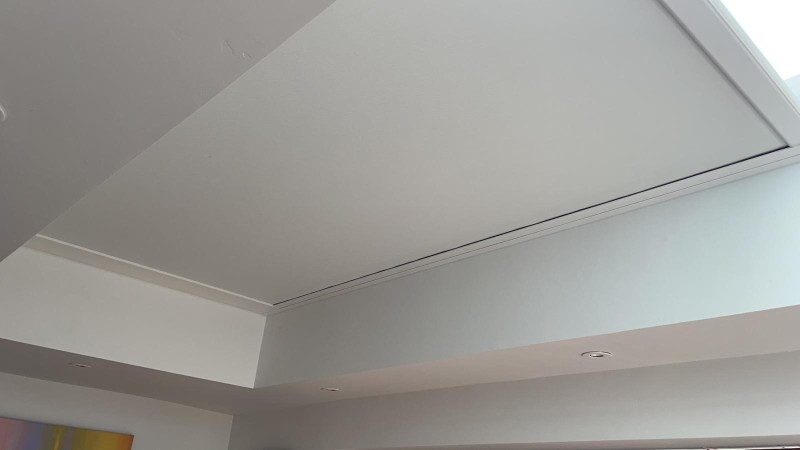
Concealing the roof blind hardware is easiest during the design stage. The space for your chosen blind can be planned in from the start. This allows for a flush upstand with clean lines. The fabric appears on one side and disappears on the other, creating a clean, uninterrupted look.
Patented concealment systems, such as Blindspace boxes, can also be specified at this stage. They offer the ultimate in minimalism, but they must be sized correctly for the blind. If the box is too small, the system simply won’t fit.
Blindspace Fully Concealed
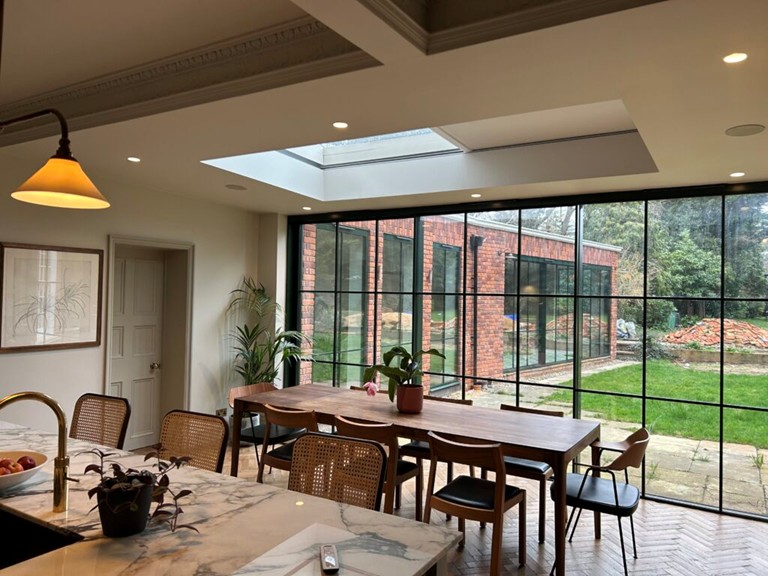
Once the upstand has been built, concealment becomes more challenging, but there are still options during the construction phase. The upstand can sometimes be modified to hide the blind. A shelf can be built inwards at the lower section of the upstand. Again, accuracy matters here, as the space must be sized precisely for the blind hardware.
Inside Upstand Shelf Concealed
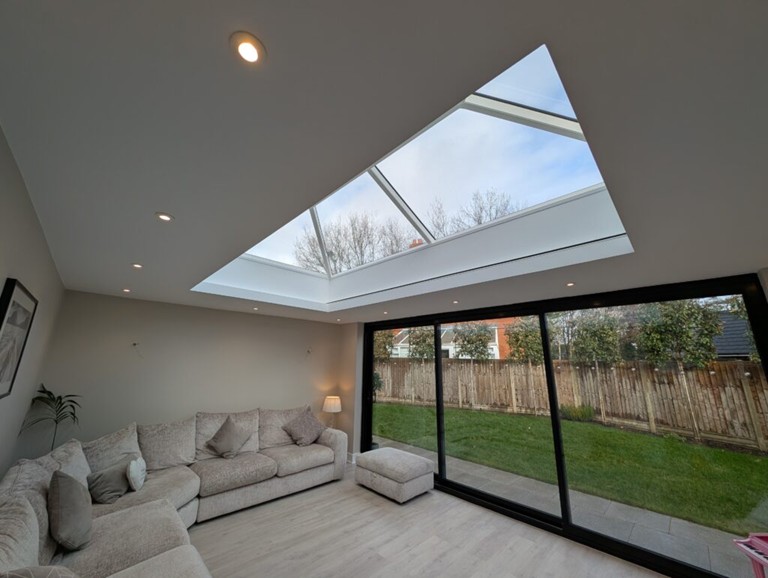
After the build is complete, structural changes become disruptive and unrealistic. At this point, a retrofitted solution with a visible headbox and side channels is the only practical option. For most homeowners, this is perfectly acceptable, as it still delivers the performance and comfort priorities already identified. Concealment is a preference, not a priority, but when planned early it can elevate the final look significantly.
Simply Retro-fitted Post Build
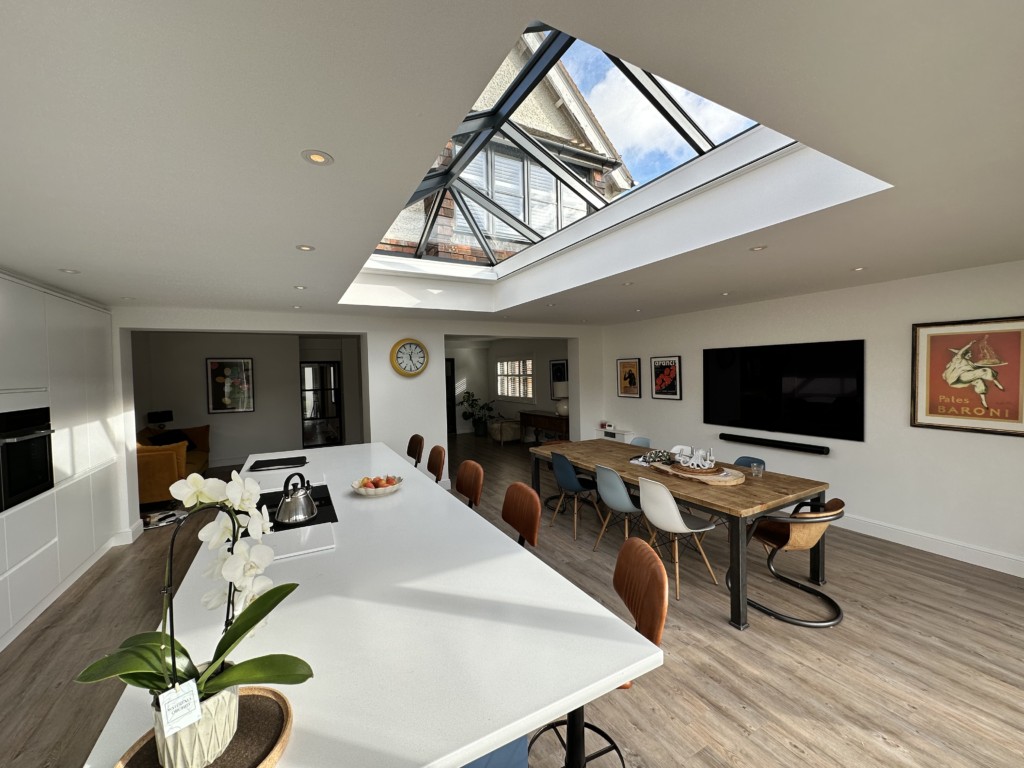
The Fabric Headbox Size
The fabric headbox is one of the most important parts of any roof lantern blind, yet it’s often underestimated. Its job is simple but critical: protect your fabric. That fabric is what delivers your comfort. Without a headbox, the fabric sits exposed to dust and debris. Honeycomb blinds suffer the most because their concertina structure acts like a shelf that traps dust and reduces performance.
The headbox itself is a powder‑coated aluminium housing sized around the roller tube. The tube holds the fabric, the tubular motor, and the key working components. Shorter roof blinds use a smaller headbox because the fabric roll is smaller. Longer spans need a larger one to handle the extra fabric. Twin‑fabric systems can reduce the headbox size because each fabric only travels half the distance.
Will The Headbox Be Obstructive ?
In practice, the headbox almost always blends into the lantern’s upstand far better than homeowners expect. Hardware can be powder coated in any classic RAL colour. Most customers still choose the standard white because it disappears into the painted upstand, even on the largest systems. Claire, who invested in a seven‑metre Hercules XL, put it best: she was “really surprised how unobtrusive the headbox is. It just blends in and hasn’t spoilt anything.”
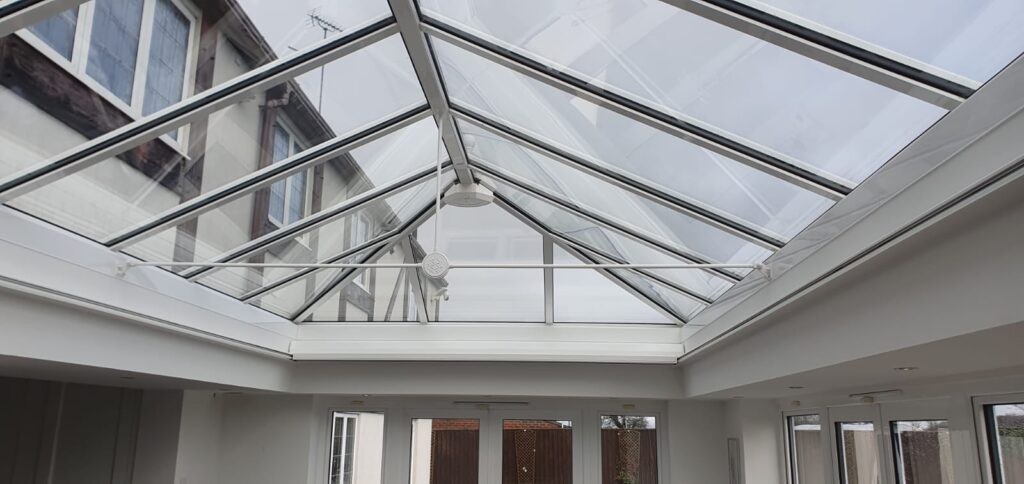
Positioning matters just as much as size. The headbox should ideally sit so it doesn't interrupt your view of the roof lantern. You should still see every corner and edge, even with the blind installed. The lantern stays the main feature, the star of the show.
Depth of the side channels
The depth of the side channels plays a major role in how well a roof lantern blind performs. Their job is to guide the zipped fabric so it travels smoothly without drifting or telescoping off the roller tube.
On systems such as Athena roof blinds, the side channels are adjustable. This lets the blind cope with lantern upstands that aren’t perfectly parallel while still keeping the look minimal. These channels are usually around 55 mm deep.
Some systems can position the side channels directly beneath the roof lantern. This helps the hardware sit neatly within the architecture and keeps the sightlines clean
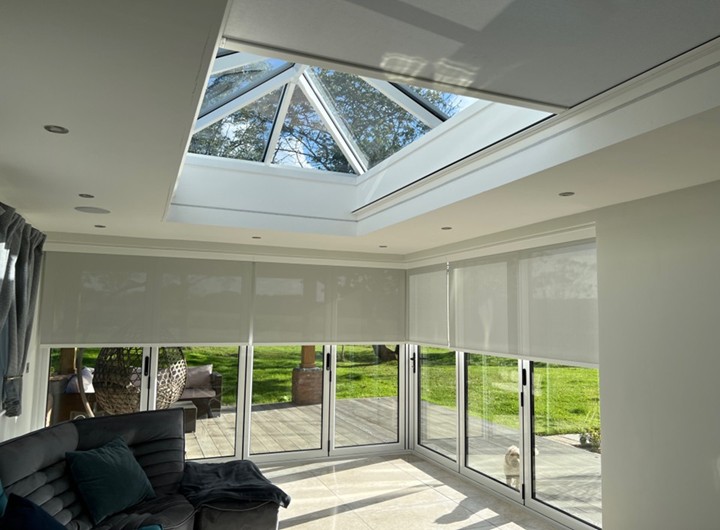
Other roof blind systems use aluminium shelving profiles to deal with uneven upstands. These profiles can range from 50 to 80 mm depending on the size of the roof lantern. The blind then has to be manufactured smaller so it sits square inside an opening that isn’t perfectly true.
Honeycomb systems often use trims to disguise the gaps and reduce the light bleed at the sides of the blind.
The right channel depth keeps the fabric properly guided. Its positioning in the upstand depends on how the side‑channel inserts and fabrics can handle the roof lantern temperatures.
The inserts that guide the Athena zipped fabrics are made from ABS plastic. They don’t begin to soften until they reach 100 degrees centigrade, which gives the system a strong safety margin.
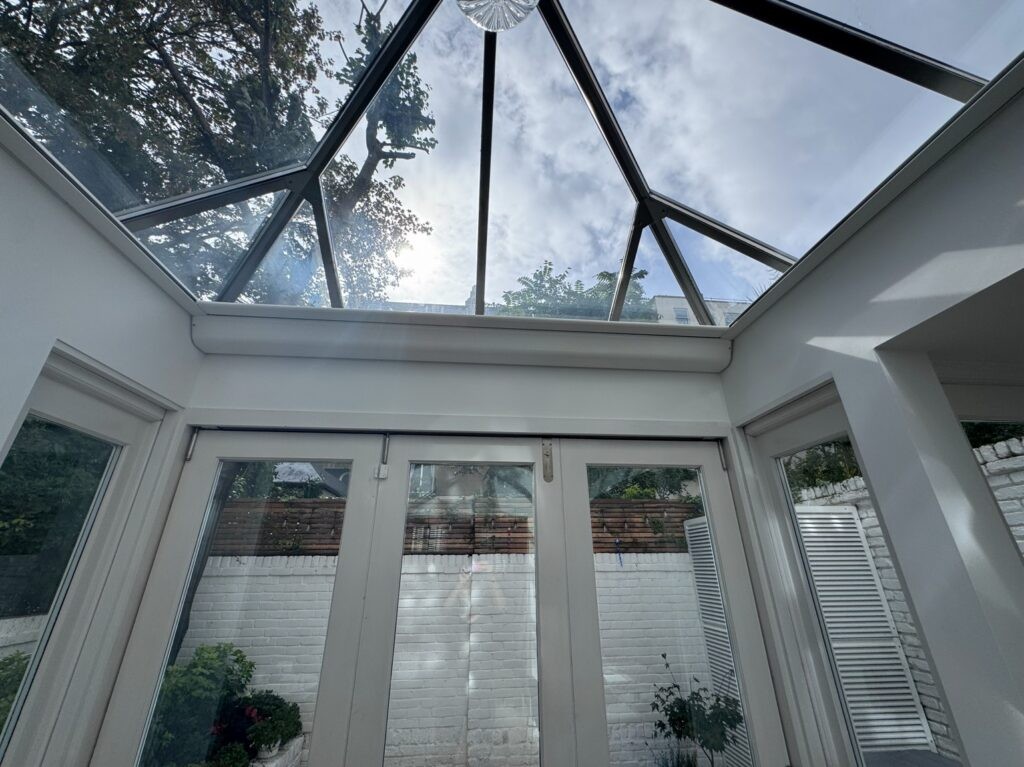
Preference 2: No visible cords or sagging fabric
If a clean, uninterrupted appearance is important, it helps to understand how different fabrics behave in a roof lantern. Some systems should rely on visible cords to stay flat.
Honeycomb fabrics contain adhesive bonds between each cell. When the temperature rises in a roof lantern these bonds soften and the fabric relaxes. This relaxation shows as sagging across the span. This is why many manufacturers keep tensioning cords in place to hold the fabric horizontal.
Roller fabrics behave differently but face a similar challenge. The fabric will naturally dip in the centre under its own weight.
Roof blind systems using constant tension springs once relied on up to two extra visible cords. These cords have since been removed to achieve a cordless look, but nothing replaced the mechanical tension they were doing. With the extra support gone, the fabric is left relying on decreasing tension from only two CTS springs. The result of this reduced tension makes sagging far more likely and far more visible especially on larger lanterns.
Achieving a cordless look without sagging means using fabrics that stay stable under tension. Roof lantern blinds need dimensionally stable roller fabrics and serious pulling power to keep everything flat. Torsion spring systems deliver that strength. The Athena and Hercules systems use this technology to give homeowners a real chance of getting a flatter fabric.
But every fabric has limits. Large spans push any material to its edge. Work within sensible size parameters and set clear expectations. A fabric suspended horizontally will always fight gravity and heat. The right system simply gives it the best chance to stay flat and look sharp.
Preference 3: Rippling of fabric
Rippling is one of the biggest surprises homeowners experience with roller roof blinds. It often appears along both welded edges of the blind. The rippling can spread across the fabric if the blind system cannot generate enough tension to pull everything taut.
But the zip never existed to keep the fabric flat.
The welded joint between the cloth and the zip creates stiffness and extra thickness along both edges. When the blind rolls up, those thicker edges build more diameter on the tube than the centre. That uneven build up creates waviness. Larger blinds and heavier fabrics exaggerate the effect. More size means more weight. More weight means more ripples.
If the system cannot pull hard enough on the fabric, the rippling becomes obvious. That is why high tension matters. Torsion spring systems like Athena apply far more force to the cloth, and achieve a flatter finish.
Preference 4: Direction of the blind
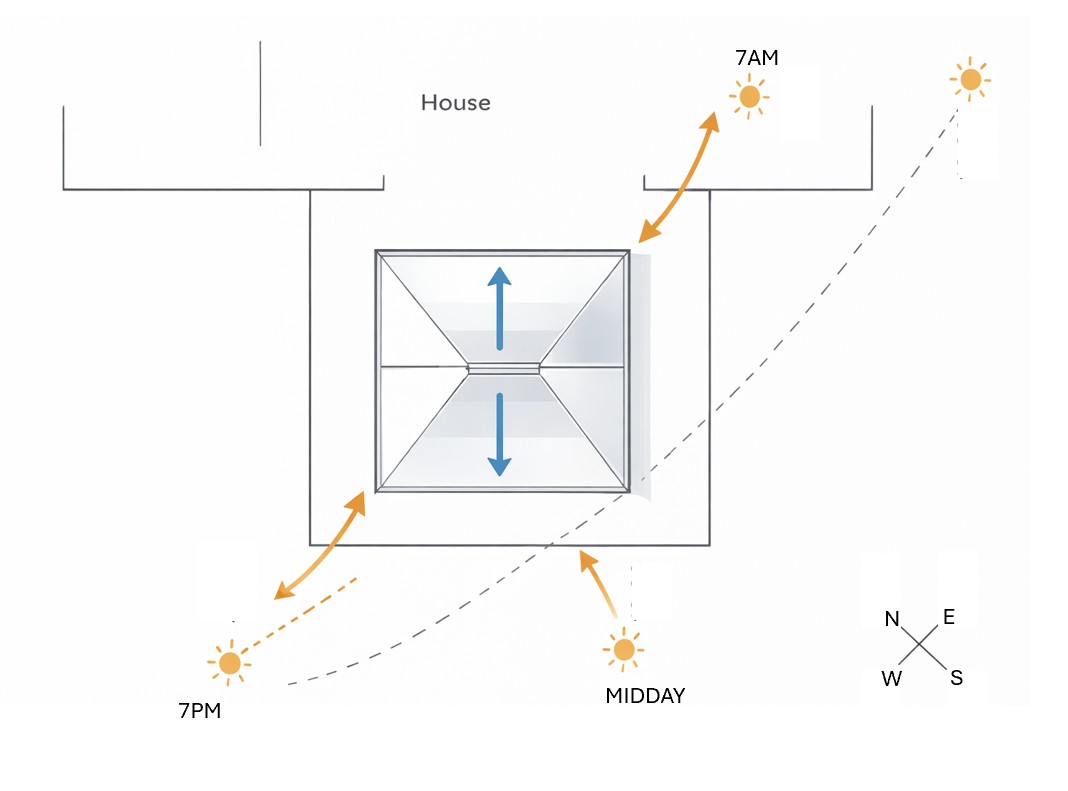
Different times of day bring different angles of glare. Many homeowners assume they’ll use the blind fully open or fully closed. In reality, most people end up using it partially open to manage glare at specific moments. To do that well, it helps to understand how the sun moves across your space throughout the day.
The direction your roof blind travels can be shaped by this preference. The power supply and the headbox containing the motor are positioned so the blind can travel away from the sunlight. This applies to all single‑blind roof systems. Twin systems are the exception, with blinds on both sides of the lantern meeting neatly in the middle.
You might want to shade the cooker so you can read the digital controls without darkening the whole room. Or perhaps a certain angle on the TV becomes unwatchable at specific times. Understanding the sun’s path helps you decide the configuration of your electric roof lantern blind.
Preference 5: Motor Choice
The motor is the hidden powerhouse of your roof lantern blind. You never see it, but you feel its impact every time the blind moves. A good motor makes the blind glide. A poor motor makes it struggle. It’s that simple. And because the motor sits inside the fabric tube, it’s easy to underestimate just how important this choice is.
A motor determines how your roof lantern blind connects to your home. How quietly it runs. How reliable it performs over the years. Choosing the right motor and your blind becomes part of your lifestyle.
Mains Powered Options
Hardwired motors with 3‑core cabling are the gold standard for homes using systems like Crestron, KNX, or Loxone. They give your home automation integrator full control, allowing the blind to behave exactly the way your home behaves. Opening with your morning routine, closing with your lighting scene, or reacting to temperature and sunlight. It’s smart living done properly.
If you want smart features without a full automation system, Somfy radio and Zigbee motors offer a clean, affordable route. Paired with the Somfy TaHoma Hub, they unlock timers, schedules, app control, voice control, and sun‑sensor protection. The standard remote keeps everyday use simple, while the hub adds the intelligence.
Battery Li-On Solar Powered Options
Not every home has wiring in the upstand, especially in retrofits. That’s where lithium‑ion battery motors could be the preferred option. A solar panel keeps the battery topped up, giving you a cable‑free installation that works beautifully on the Athena systems. These motors pair with the hub in the same way as their mains-powered counterparts. But battery motors have limits. The largest roof blinds like the Hercules, need the muscle of a mains‑powered motor to move with confidence.
Motor choice is all about planning. Get it right early and everything else falls into place. Wiring, control, integration and long‑term performance all depend on choosing the correct motor from the start. Full automation, app control or a battery‑powered setup all rely on one thing. The motor that makes the blind behave exactly as you expect.
Honeycomb roof blinds use the same motor options. The difference is the fabric. Because it’s lightweight, these blinds use lighter‑duty motors that match the reduced load.
Preference 6 – Maintenance
A roof lantern blind works hard in a tough environment. Heat, UV, dust and even the odd fly all put pressure on the system. An electric roof lantern blind stays reliable only when every component pulls its weight. High‑quality parts reduce the risk of failure, keep the system running smoothly and protect your investment over time. Fabrics, motors, springs and ABS‑moulded zip inserts all play their part. Any moving system can wear, but choosing components built for endurance keeps the chances low. Good maintenance habits do the rest.
Hardware is easier to maintain. You can wipe away dust, debris and the occasional dead fly with a clean cloth. A vacuum with an extension hose is useful.
Cleaning the fabric is simple in theory: mild detergent, clean water and a soft sponge. The challenge is access. The side of the fabric that faces the glass is hard to reach. This is why preventing dirt from settling matters far more. Closing the blind when you’re not using it protects the fabric from dust and grime. It’s a small habit that makes a big difference.
Understanding The Impact Of Flies
If flies are a problem in your home, a couple of extra steps help. Closing the blind before opening doors or windows to the outdoors keeps insects out of your lantern. You may also want to consider Athena headboxes facing downwards so dead flies cannot roll into the fabric. Homeowners who experience heavy fly activity should avoid honeycomb fabrics. Flies can enter the cells, buzz continuously and easily be trapped in the concertina structure.
Electric roof blinds benefit from occasional servicing to ensure the tension and moving parts remain correctly calibrated. Over time, even high performance systems can shift slightly. The Hercules carries a lot of tension, so the yachting cords may stretch slightly in the first couple of years. Small adjustments keep everything running smoothly. Just as you service your car, a little attention keeps the system performing at its best and extends its lifespan.
Preference 7 – The Fabric
The fabric is the big one.
Surprisingly, it is the part homeowners forget about when choosing an electric roof lantern blind. Other preferences take over in the mind. The focus is on avoiding visible cords, preventing sagging, hiding the system and adding Alexa voice control. But somewhere along the way, the original priorities get lost. The things you wanted to solve in the first place slip into the background. This is where the magic needs to happen.
Fabric choice has to be more scientific than simply picking dimout or blackout. It has to solve the real problems you identified at the start. Heat. TV glare. Brightness. Winter heat loss. Fading. Acoustics. This is where the data matters. You need to look at the characteristics of each fabric. The qualities that make it perform, not just the interior design aspect. Colour and style matter, but performance is what protects your living space and keeps it usable all year round. All of this while giving you the light levels and the connection to the outdoors you may want for your home. The right fabric makes the vision real without compromise.
The fabric you choose has to support the way you live in the space you’ve created. This is about turning the dream into something that works every day. It’s about keeping the vision alive and not letting it get diluted by distractions along the way. When you choose the right fabric, the blind solves the problems that brought you here in the first place.
The Final Step
Thank you for taking the time to work through your priorities and preferences. The effort you’ve put in will help you invest wisely in the right roof lantern blind for your home and gives us a clear understanding of what matters most in your space.
The final step is simple. Upload your images of the roof lantern and any architectural plan or elevation drawings, and give us the roof lantern size. Once this is done, you can fill out your details and send in your request for a personalised solution report.
Your report will outline the recommended solution or solutions, the most suitable fabrics and a realistic budget range so you can move forward with confidence. When you’ve received your report, you’re welcome to join Chris on a TEAMS call to go through everything in more detail and address any questions or concerns